12 May: International Women in Mathematics Day
This article is only available in German.
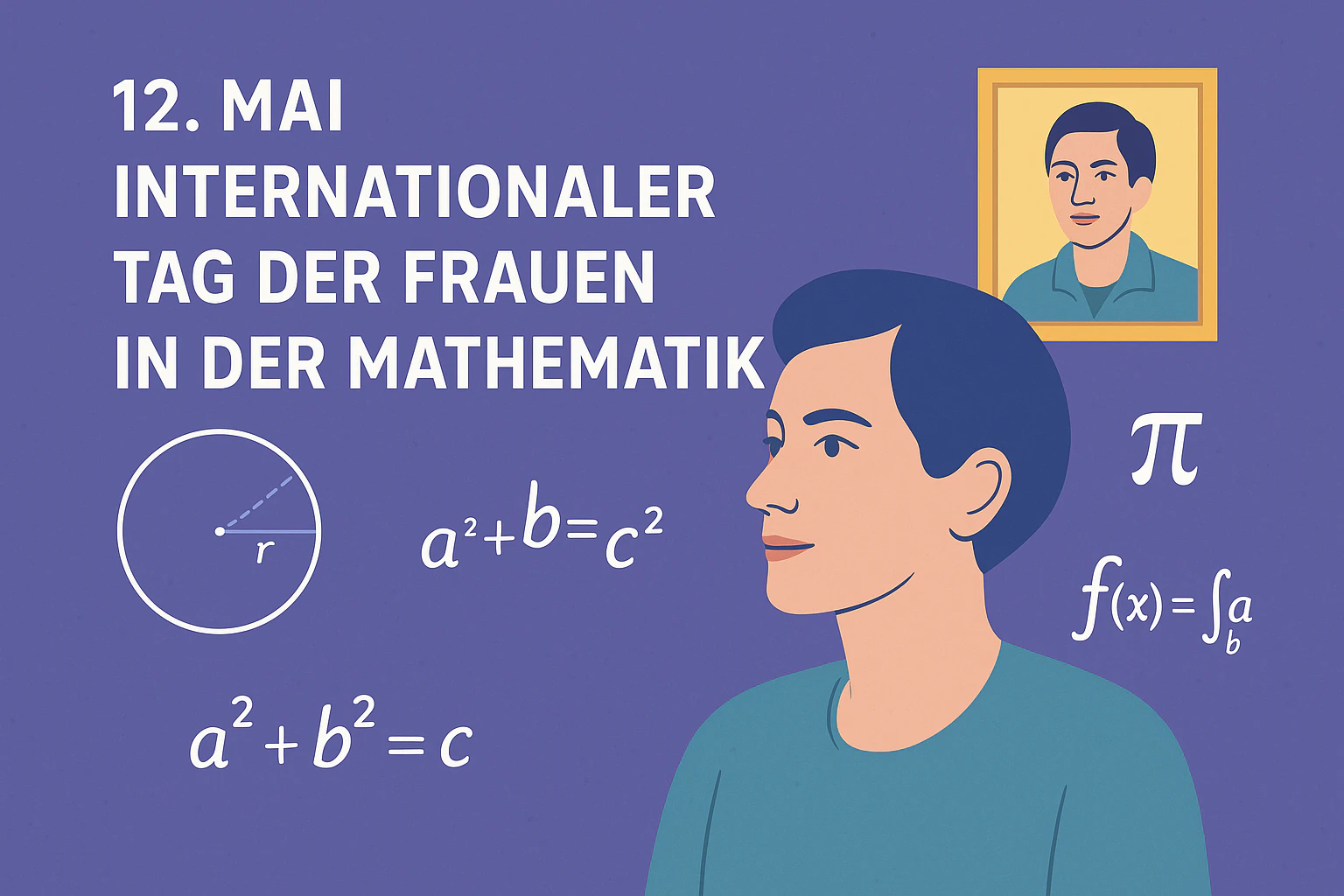
And why we should celebrate women once again…
Spring brings a host of days honouring women in various spheres, for example:
- International Day of Women and Girls in Science(11 February): Highlights the role of women in scientific disciplines
- International Women’s Day (8 March): Recognises the social, economic and political achievements of women worldwide
- Mother’s Day (11 May – second Sunday in May): Honours mothers and their contributions to society.
And immediately afterwards: 12 May – International Women in Mathematics Day.
These days are more than symbolic. They draw attention to persistent structural inequalities, untapped potential and the need for lasting change.
A brief look at the figures – and the reality
Some facts about the situation of women in mathematics:
- In the USA, 40% of all bachelor’s degrees in mathematics were awarded to women in 2015–2016. Looking at subsequent academic stages, this proportion falls exponentially. For example, only 12% of professors at research-intensive universities are women! (Sources: AWM-Association for women in mathematics, Women in Math – @MIT)
- The 2023 University Report on Austrian universities shows that, despite strategic support measures, the proportion of women studying STEM subjects has stagnated for years.
The target for 2030 is 38%. Taking the 2021/22 academic year as a baseline, this requires a relative increase of 11%! (Source: 2023 University Report) - At the University of Vienna, women account for 47.3% of mathematics students – but only 21.50% of staff. (Source: https://womeninscience.univie.ac.at/) .
Unfortunately, these figures are not the exception but the norm. This makes it all the more important to highlight role models – women who have forged their paths despite these barriers and set new standards.
Why 12 May?
12 May is the birthday of Maryam Mirzakhani – the first woman and the first Iranian to be awarded the prestigious Fields Medal. Awarded every four years to outstanding mathematicians under the age of 40, it is regarded as one of the highest honours in mathematics – comparable to a Nobel Prize.
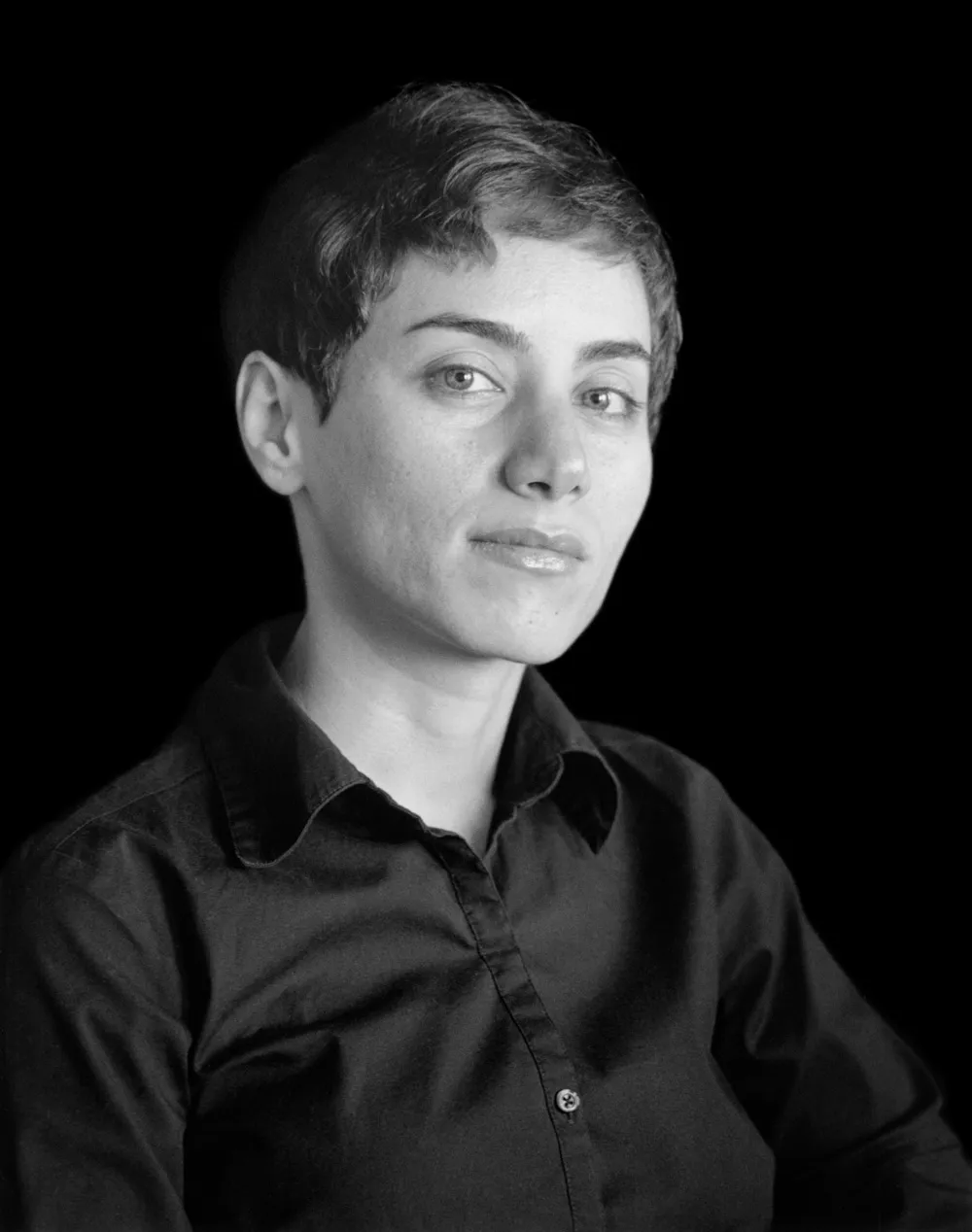
Yet Maryam Mirzakhani was far more than an award-winning scientist. Her life and work symbolise the often-overlooked potential of many women in mathematics. Her example highlights how societal expectations, inadequate support opportunities and unconscious biases still make it harder for girls and women to access STEM subjects.
Through her pioneering work in theoretical mathematics, Mirzakhani not only shaped her field but also inspired a new generation of young female mathematicians worldwide.
Perhaps this evening offers a good opportunity to unwind in a different way – for example, by watching the documentary “Secret of the Surface: The Mathematical Vision of Maryam Mirzakhani” or an inspiring lecture by Professor Holly Krieger (University of Cambridge), made available by Gresham College.
Looking ahead – and taking action
The underrepresentation of women in mathematics – as in many other disciplines – is not an immutable law of nature! It reflects existing social structures and, at the same time, offers an opportunity to reshape them deliberately with the future in mind.
Initiatives such as the European Youth Goals (EYG), the Austria-wide MINT-Girls Challenge and Fem*MA (the network for women* in mathematics at TU Wien) are already laying valuable groundwork and creating an important foundation for greater visibility and equality of opportunity.
For mathematics to continue to offer scope for innovation, diversity and fresh thinking, it needs more than formulae and proofs – it needs people with different experiences, perspectives and voices.
Saskia Resch